Two days of mas, four weeks of fetes, six weeks of Panorama, and a whole year of rehearsal — Trinidad Carnival is what the calendar bends around. Belmont sits at the heart of the tradition, with pan yards and historic mas camps at addresses within walking distance of our gate. This is how we plan a Carnival week for our guests.
Carnival — capital C — falls on the Monday and Tuesday before Ash Wednesday. In practical terms, that is a five-week season that ends in a two-day street parade the whole country has been preparing for since the previous September.
Panorama (steel pan). J'Ouvert (predawn mud & paint). Monday Mas. Tuesday Mas. A hundred fetes in between. Everything happens on or around the Queen's Park Savannah, seven minutes from our gate.
Most first-timers arrive on the Thursday or Friday before Carnival Monday. Here is the shape of the week you'll walk into — the anchor moments that structure every other decision.
Children's mas in the Savannah. The gentlest way to see the costumes at scale. Free.
Steel pan's Super Bowl. Grand Stand, Savannah. The single most Trinidadian night of the year.
Kings & Queens of the Bands, Calypso Monarch. The pageant. Sleep early — J'Ouvert is at 4am.
Mud, paint, oil, chocolate. Steel bands lead through the dark. Wear white you'll never wear again.
The two days. Mas bands cross the Savannah stage. Tuesday is the "pretty mas" — feathers, full costume.
Jour Ouvert — "day open." Carnival begins in the dark. Small bands led by a steel section start walking through Port of Spain at 4am, throwing mud, paint, oil, chocolate and cocoa on each other and on you.
It is the older, rawer Carnival — a survival of the 1830s Canboulay celebrations, when the emancipated marched with torches and drums. The mess is the point. So is the sunrise, which arrives around 6.30am with the bands crossing the Savannah covered head to toe.
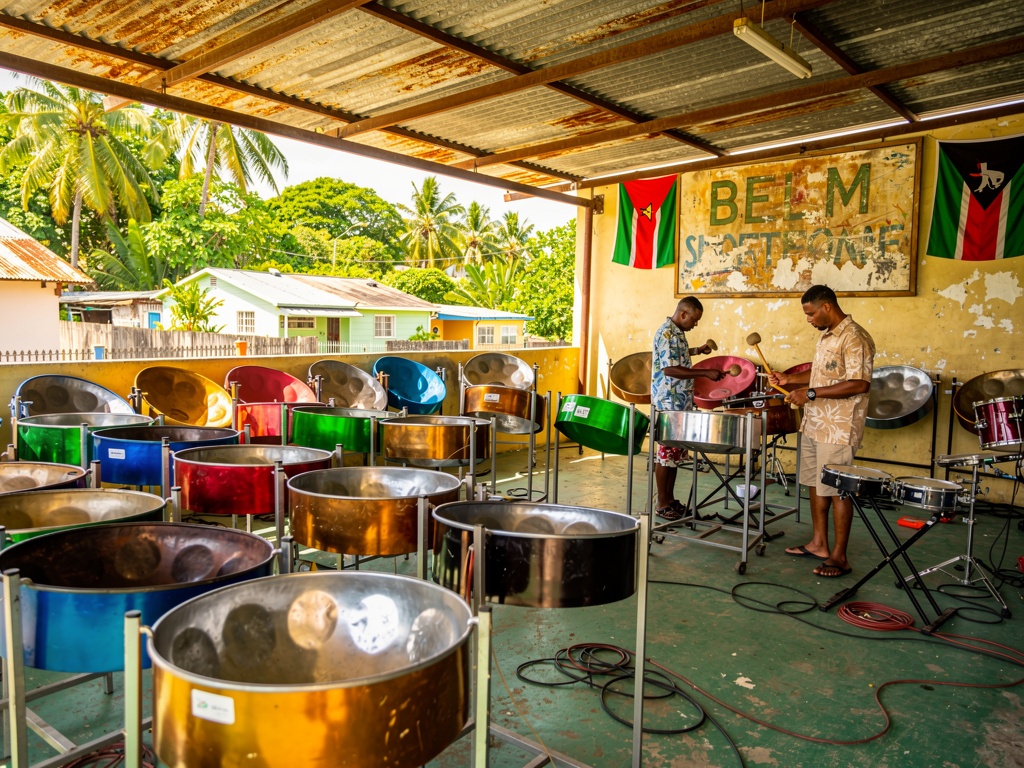
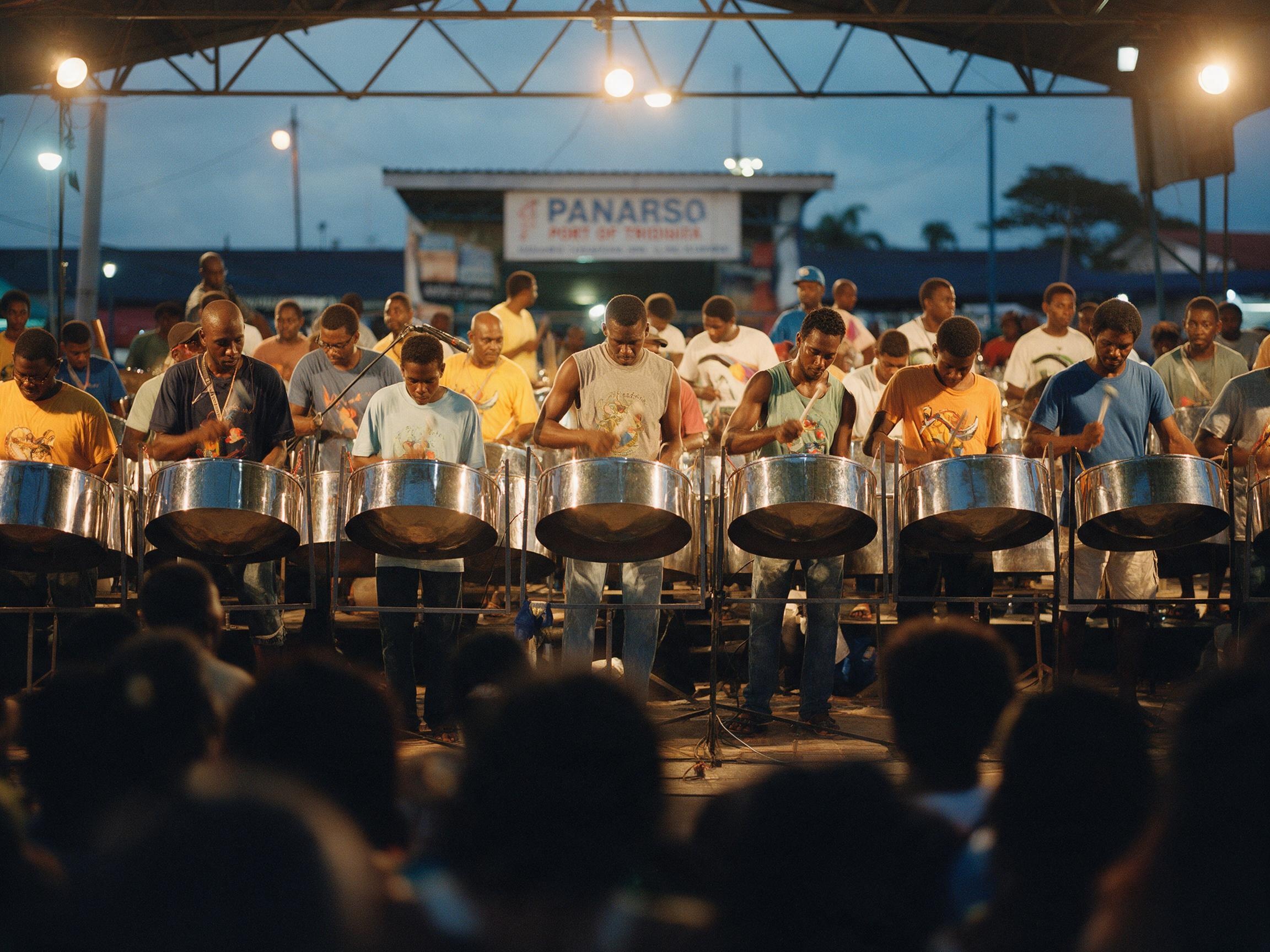
Once a year, on the Saturday night before Carnival, the country's twelve best large steel bands roll their instruments — a hundred pans, on wheeled racks, pushed by two hundred people — onto the Savannah stage and play a ten-minute arrangement of a single calypso for a national title.
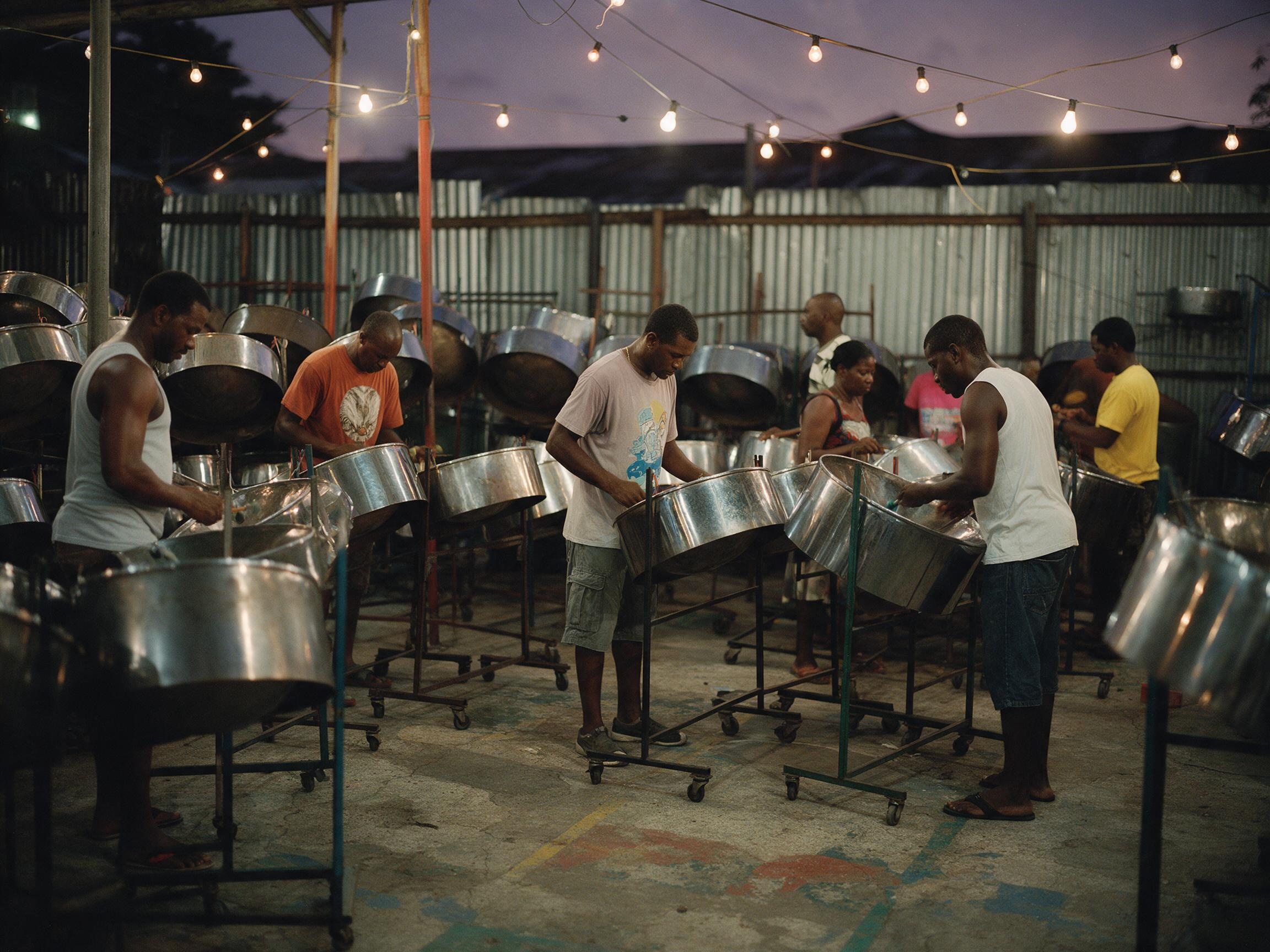
The prelims and semifinals happen in the yards themselves in the two weeks prior. Wandering into a yard on a Wednesday night in late January and watching a section rehearse the same eight bars for three hours is the version most locals actually go to. Everything is free before Finals.
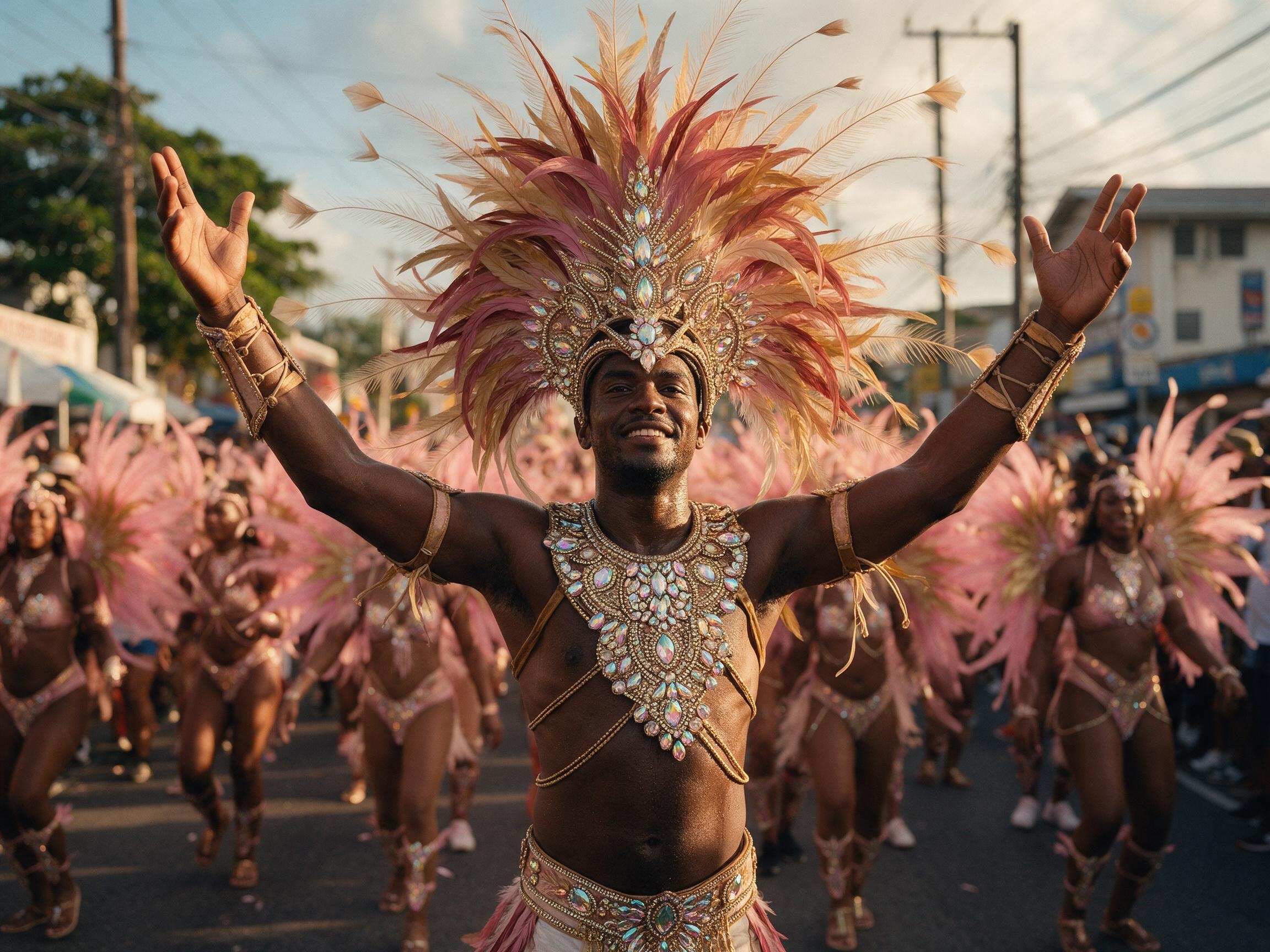
"Playing mas" is the point of Carnival. You register with a band months in advance, you collect a costume the week before, and on Monday and Tuesday you walk with 3,000 other people through the streets for eight hours, crossing the Savannah stage twice.
Monday is the informal day — a t-shirt from the band, shorts, beads. Tuesday is "pretty mas" — the feathers, the wire-bent headpieces, the full costume on the news. All-inclusive bands feed you, water you, truck you a mobile bar, and hand you a security rope. Guests we've hosted have played with Tribe, Yuma, Fantasy, Harts and Bliss.
A fete is a Trinidadian party with soca, food, drink and a specific form. There are three main kinds — all-inclusive (you pay once, eat and drink all night), cooler (bring your own drinks, cheaper), and cruise (on a boat).
In the two weeks before Carnival there are 40 to 60 named fetes. Any four you get to is a good week. The most famous — the ones that will show up in your Instagram feed — are listed in the section below.
Not exhaustive — there are hundreds — but the nine below are the ones repeat guests ask us to book for them a year in advance. We hold an internal list of trusted ticket contacts. All prices are 2026 estimates.
Trinidad's biggest soca artist, five-hour set, 20,000 people. The one non-negotiable fete of the season. Tickets go on sale in October and vanish.
TT$1,200 - 1,800Daytime all-inclusive on the peninsula. Boutique crowd, curated food, sunset over the Gulf of Paria. Books out first among the daytime fetes.
TT$1,500 all-inSunrise breakfast fete. Doubles, saltfish, Champagne. A polite way in for anyone unsure about the 4am energy of J'Ouvert.
TT$900 all-inWater-fete. You will be soaked to the skin in five minutes. Wear waterproof everything. Younger, wilder, and very well-priced.
TT$600 all-inThe all-inclusive our Belmont regulars love. Set in a valley, small crowd, unhurried. Good soca DJs and no queue for the bar.
TT$1,600 all-inOvernight fete, midnight to sunrise. If you want to see how Trinidadians actually pace a Carnival week, this is the answer.
TT$900 all-inOld-school all-inclusive that opens the season. Traditional Trini food (curry duck, pelau), long-serving DJs, families. The way locals start.
TT$1,000 all-inCurry-duck-and-soca cooler fete. Bring your own bar. A rite of passage — ask any Trini what a "duck work" is and you'll get a smile.
TT$400 coolerBoat fete around Gaspar Grande. Sunset on the water, DJs on deck, dinner at anchor. The most photogenic day of the season, weather permitting.
TT$1,400 all-inTwo of the country's best-loved traditional mas camps operate out of Belmont, in the same wooden buildings they have worked in for decades.
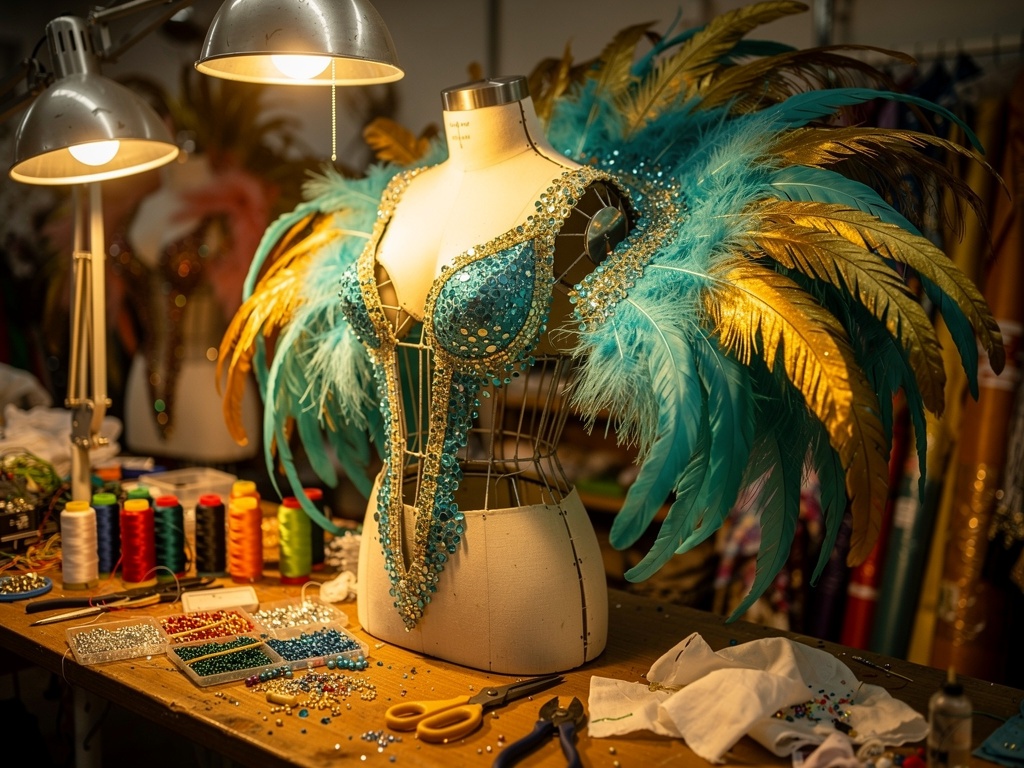
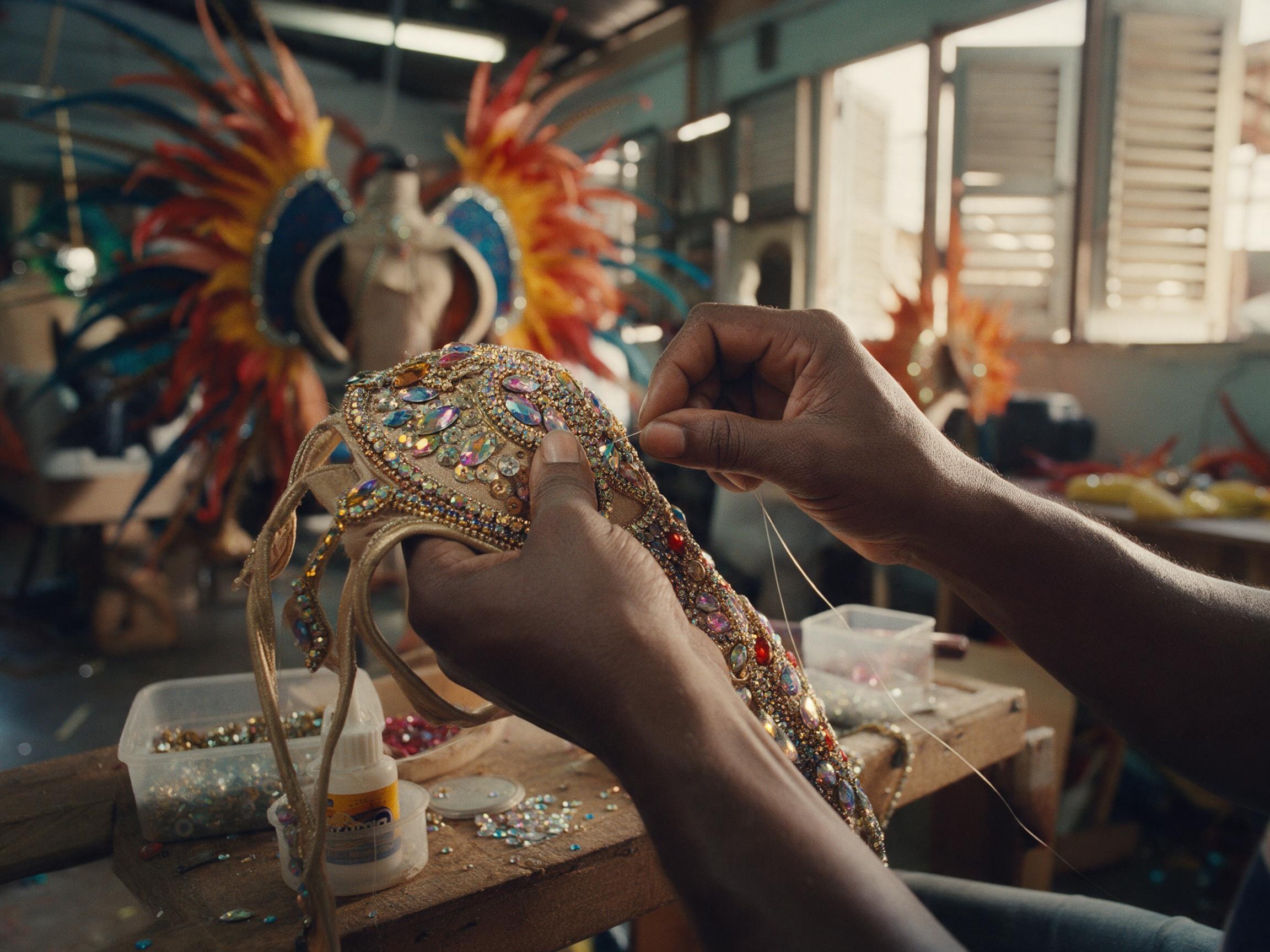
The camps open from October onward. From November, most nights you can walk past and see wire-bending, sequin-work, and costume fittings through the open windows. Ring the bell, ask politely, and you can usually watch from the doorway. Bring cash if you'd like to buy a small costume element.
A working sailor-mas band on Jerningham Avenue, one of Belmont's historic streets. Sailor mas is a foundational Carnival tradition — costumes hand-built in the neighbourhood, played on the road Carnival Monday and Tuesday. Visitors welcome in the weeks before Carnival; ask at check-in for the current visiting nights.
A long-running sailor-mas band a short walk from our gate, in a two-storey Belmont gingerbread just off the Circular Road. Traditional sailor and small-band pretty mas, hand-built in the neighbourhood. Visitors welcome from November onward — wire-bending Thursdays are the night to come.
For the large downtown all-inclusive bands (Tribe, Yuma, Fantasy, Bliss, Harts), registration and costume distribution happen at their own headquarters, mostly along Ariapita Avenue and Woodbrook — a ten-minute drive from Belmont. Ask at check-in and we'll pass along the current addresses and contact numbers.
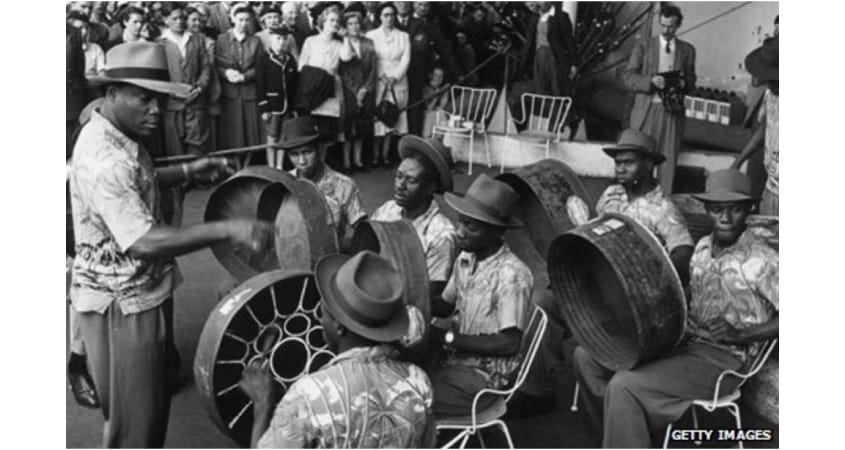
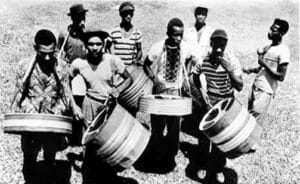
The steel pan grew out of the yards of Port of Spain in the late 1930s, and Belmont has been part of that story throughout. Today, four world-class panyards sit within walking or short-drive distance of The Sanctuary — and rehearsal is open to the public on most nights.
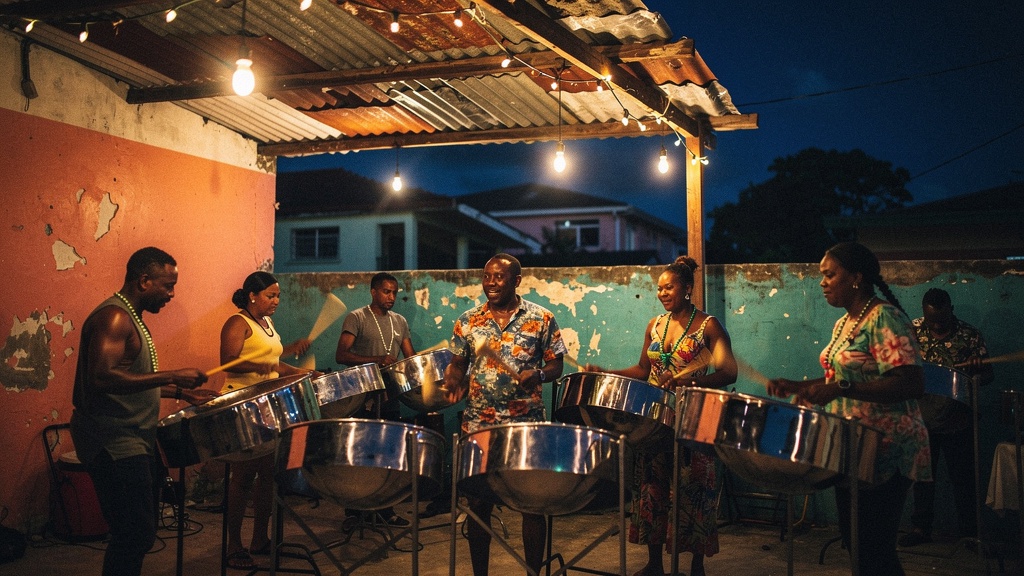
Turn up between 7pm and 10pm from November onward. Sit at the back of the yard. Nobody will bother you. Buy a beer from the bar. In the two weeks before Panorama, the sound of a hundred pans playing the same eight bars in unison, over and over, is the most Trinidadian thing you will ever hear.
The closest yard to our gate — a small, community band with a big local following. Rehearsals ramp up in December. Beginner-friendly listening: they play through the arrangement slowly, section by section.
A medium band with a devoted following and one of the best panyard bars in Belmont. Come on a Friday night after 9pm for the fullest sound. The yard opens onto the street; you can listen from the pavement if the yard is crowded.
Twelve-time Panorama champions. The yard is a warehouse-scale space on Charlotte Street; on a Saturday night in January the pan is audible three blocks away. This is where you take a first-time visitor.
The oldest continuously performing steel orchestra in the world — founded 1935. Multiple Panorama titles and a rich sound built on the tenor and double tenor sections. Duke Street is a short walk from downtown; catch a route taxi back to Belmont.
Other yards worth the trip if you're staying more than a week: Desperadoes (Laventille, 7 min walk), Silver Stars (Newbold St, 10 min), Phase II Pan Groove (Woodbrook, 12 min drive), Skiffle Bunch (San Fernando). We'll hand-draw a walking map at check-in based on which nights you're here.
Because Ash Wednesday moves, so does Carnival — typically somewhere in February, occasionally early March. Rooms sell out a year in advance; repeat guests get first refusal every October.
Below: the next four years, plus a week-by-week countdown of what happens inside the season itself.
Panorama Finals: Sat Feb 14 · J'Ouvert: Mon Feb 16, 4am · Ash Wed: Feb 18
Panorama Finals: Sat Feb 13 · Held for repeat guests until Oct 2026
Later Carnival than usual — a leap-year Tuesday. Panorama Finals: Sat Feb 26
Enquiries welcome. Room selection opens Oct 2027 for returning Carnival guests.
Nothing you can't figure out on your own by Thursday. But if you know these six on Monday morning, the week runs much easier.
Mas costumes, all-inclusive fete tickets, and rooms all sell out three to four months before Carnival. If you're reading this in January for the same year, you are already late. We keep a small waitlist — email us.
Bars in the yards, coconut vendors, doubles men, route taxis — all cash, all TT$. ATMs run dry Sunday night through Wednesday. Draw TT$3,000 - 5,000 on arrival and split it into two pockets.
One pair you don't mind destroying — for J'Ouvert. One pair of comfortable sneakers for Monday and Tuesday. Costume "boots" are pretty but painful; almost everyone changes to sneakers by 2pm.
Nothing rebrands a first-timer faster than sunburned shoulders on Tuesday morning. Reef-safe SPF 50, and a small rag to wipe down. Bands hand out water — drink it.
The "Road March" is the song played most times across a stage on Carnival Monday and Tuesday. Every year has a winner. Listen to the top three contenders on Spotify from December — you'll thank us on Monday.
Everyone drives to Maracas Beach on the north coast on Ash Wednesday for the traditional "Cool-Down." We arrange a driver. Sleep in, leave at 11am, be at the beach by noon, be back for sunset. It is the best day of the week.
Booking the room is only the beginning. We hold an annual list of trusted contacts — band coordinators, fete promoters, drivers, costume repair — and we quietly work through it in the four months before you arrive.
We introduce you to the band coordinators for Tribe, Yuma, Bliss, Harts and Fantasy. Registration is done in your name; we hold the receipts.
We work with promoters directly — a rare thing outside Trinidad — and can source hard-to-find tickets to Machel Monday, Beach House, and the closed-list fetes.
We collect your costume from the band's warehouse the week you arrive, and store it in your room so you don't have to queue at 6am.
Coffee at 3am. A driver at 3.30. Warm outdoor shower on your return at 8am. Fresh towels, breakfast at 9. This is our specialty.
We drop you at your band's staging area at 9am and collect you at the last stage crossing at 7pm. No walking home in feathers.
The whole country goes to Maracas Beach on Ash Wednesday. We book you a driver on retainer, with a beach cooler in the car.